

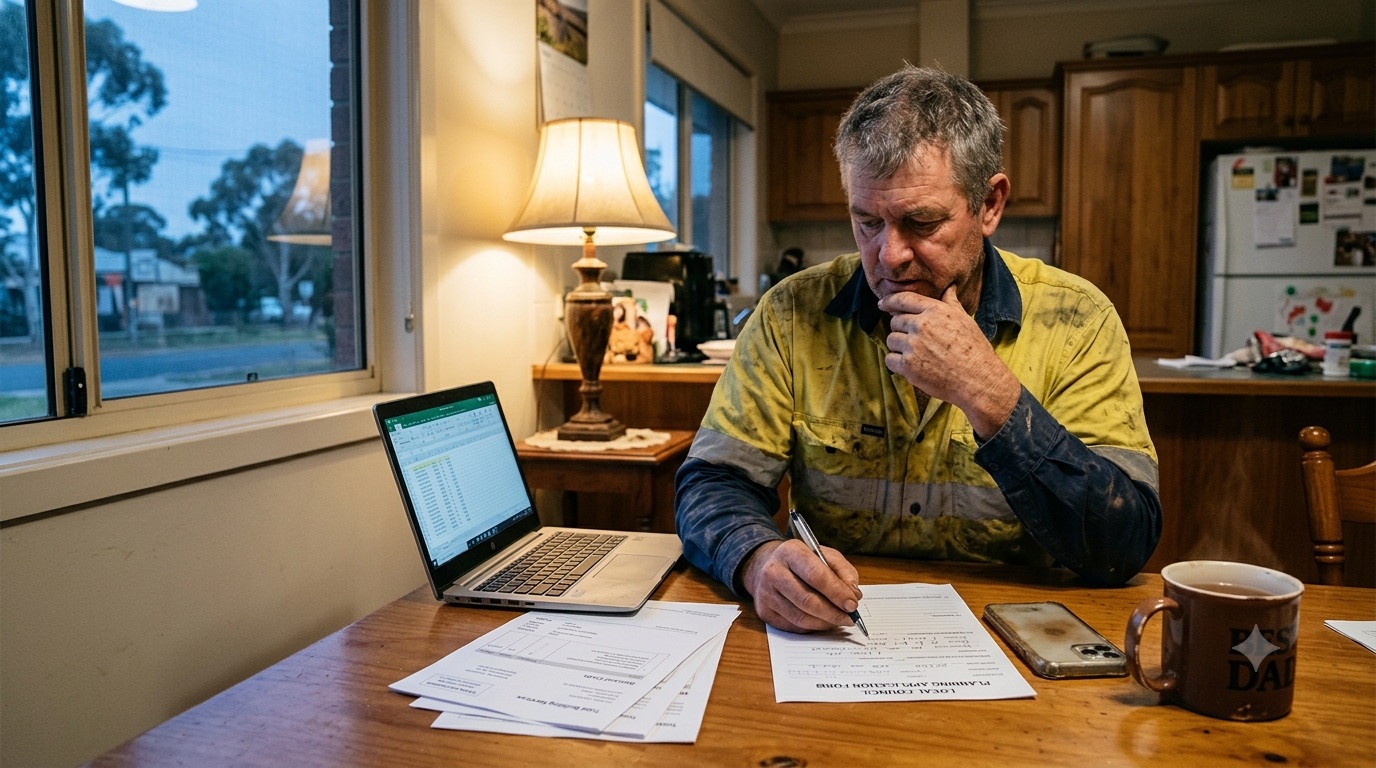
By the end of this post you will have a calm, practical way to start using AI in your business. Not a list of clever tricks. A way of thinking that makes the rest fall into place.
It is the approach I teach small and family business owners across Australia, and it holds up whether AI is brand new to you or you have had a few goes already without getting far. If the headlines have you worried rather than curious, the calmer read is what the Australian evidence on AI and jobs actually shows. This piece is the next step: what to do about it.
Let me start with the part most people get wrong.
AI is for the pile
Every person who started a small business went in to do a thing. You fix the cars. You cut the hair. You run the tours, make the jam, keep the books for other people. You went in for the thing you are good at.
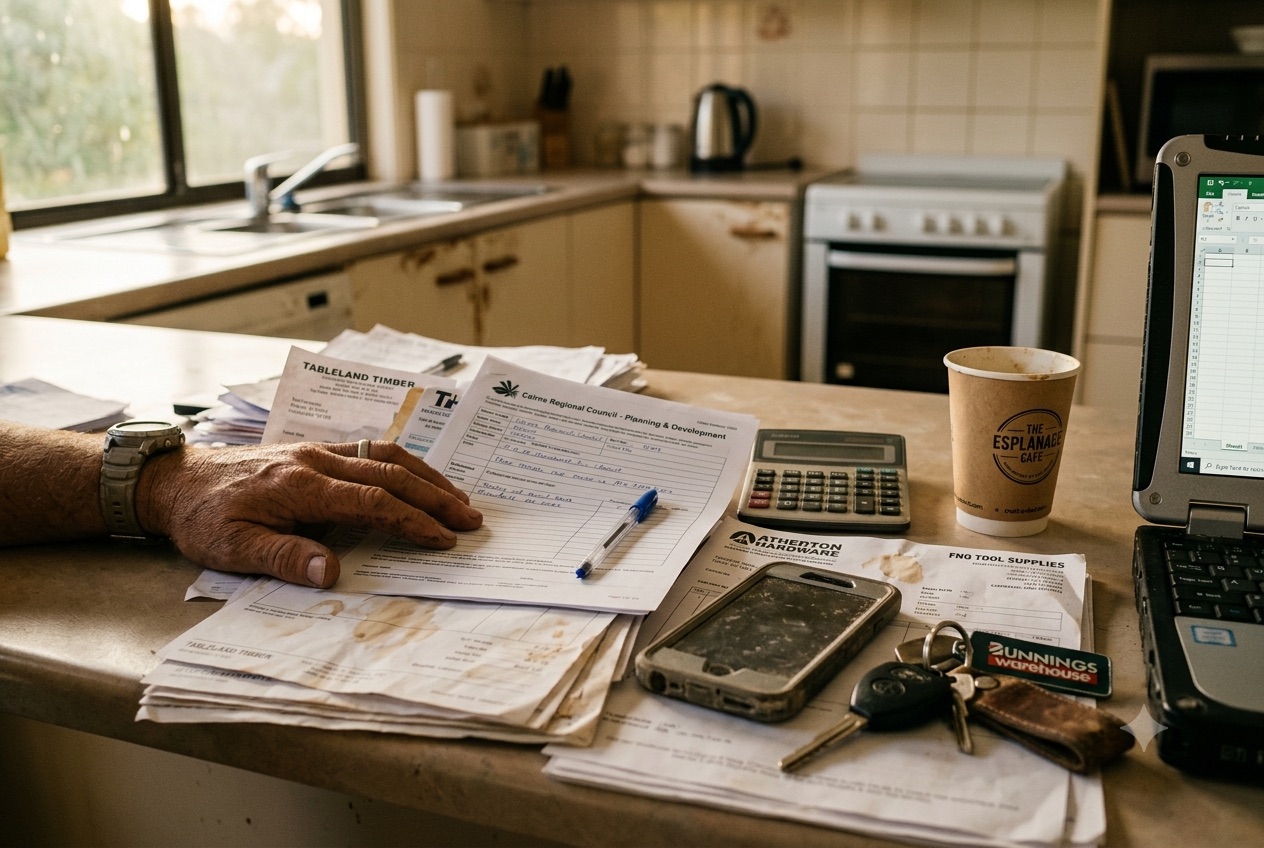
Then you found out that running a business is barely about that thing. It is the sales, the marketing, the chasing of invoices. The quote you said you would send three days ago. The council form you have read twice and still not finished. Nobody started a business because they loved doing the BAS.
That pile, every part of the job that is not your craft, is what AI is for. Your craft stays yours. The pile is the part it takes off your plate. Get clear on that, and you already know where to point it.
Treat it like a new employee
Here is the single most useful way to think about AI. Once you have this, the rest is straightforward. Treat it like a new employee.
Think about what happens when someone new starts with you. Day one they might be brilliant: qualified, sharp, keen. But they do not know your business. They do not know how you do things, who your customers are, or what you would never say. So you do not hand them the keys on day one. You show them the job. You check their work. And slowly, as they earn it, you trust them with more.
AI is exactly that new employee. Here is the part that surprises people. The AI has, in a sense, read more than any person could in a thousand lifetimes. It knows almost everything in the world. Everything except one thing. You. It does not know your business, your voice, your customers, or what you are trying to build.
So if you have ever asked an AI something, got a useless answer, and decided it was rubbish, it was not being stupid. It was a brand new employee that nobody had told a single thing about you.
Your job is to train it. Training it is just talking to it: telling it about your business, how you sound, what you are trying to do. The more you tell it, the more it becomes yours. That is the goal. Not generic AI. Your AI. You do not need to be good at "prompting," and there are no magic words. You just talk to it, the way you would brief a new staff member. (If you want the one technique that made the biggest difference for me, it is in this piece on how I actually work with AI.)
The three stages of trust
Because AI is a new employee, it earns your trust in stages. There are three, and you climb them in order.
You drive. The AI helps with one small task and you check every word before it goes anywhere.
Trust: just starting
It runs a job you trained it on, connected to your tools, and you check the one point that matters before anything goes out the door.
Trust: earned on one job
You set the goal. The AI runs the whole job and you see the result rather than every step. Most small businesses will not need this for a good while, and that is fine.
Trust: the full keys
Stage 1: Assisted. You drive. The AI helps with one small task, and you check everything. At its simplest, this is using AI like a smarter search. A step on, it is drafting for you: you paste in a tricky email, it writes a reply, you change two words, you send it. You are doing the carrying, and you check every word.
Stage 2: Supervised. You have trained the AI on a job you do over and over, and connected it to the tools you already use, your email, your calendar, your customer list. Now it runs that job, and you check it at the one point that matters, before anything goes out the door. Stage 2 is where most of your time comes back.
Stage 3: Agentic. You set the goal. The AI runs the whole job, and you see the result rather than every step. Most small businesses will not need Stage 3 for a good while, and that is perfectly fine.
The rule is the same as with any employee. You do not hand a first-week hire the keys to the business. You graduate one job at a time, as the trust is earned. One thing, then the next.
And these stages are not about one product. The same climb, assisted to supervised to agentic, applies to whatever capable AI you use, including Microsoft Copilot. The tool changes; the way you earn trust does not.
Start small, and start with a piece of paper
Before you touch AI, do this. Sit down with a piece of paper and get clear about where your business gets stuck. The jobs that pile up. The work that is not really yours, but you do anyway, after hours and tired. That list is worth more than any tip I could give you.
Then pick one thing off it. For the next two weeks, once a day, take one job to the AI. Five minutes or an hour. Do not worry about getting it right. Just have a go.
Here is a real one from my own business. I am a perfectionist, and not a natural writer, so email was agony for years. I would rewrite the same three sentences for twenty minutes and still not send them. AI changed that. At first it helped me write better emails, and I learnt from what it changed. That was Stage 1. Today I do not write the email at all: the AI drafts it in my voice, I read it, and I press send. That one change gave me back hours every week.
By the end of two weeks of small goes like that, you will know what AI can do for your business better than I could tell you. You know your business. I just know the tool.
One plain word on safety
AI gets things wrong, sometimes confidently. So you keep a human, you, checking the work before it reaches a customer, a supplier, or the tax office. That is what Stage 1 is for. And be careful what you give it access to: open the doors one at a time, as trust is earned, and never hand it anything genuinely private.
I have written a companion piece, How to run AI safely on your computer, that goes through the practical checklist properly. It is worth a read before you go far. The Australian Government has also built a plain-English resource for exactly this audience, the National AI Centre. Its core advice matches mine: start small, and keep a human checking the work.
The bottom line
AI does not reward the biggest business. It rewards the one that adapts fastest. You do not need to be first, and you do not need to be technical. You need a way of thinking, and now you have one. It is a new employee. You train it, and you trust it in stages. Start with your pile. Start small. Start this week.
Where you go next depends on where you are standing. If you have not settled on a tool yet, I have written about why I chose Claude and what I weighed up. If you have started and it keeps getting your details wrong, that is the most common complaint I hear and it has a straightforward fix, which is in an old note is still giving orders. And if you want to see where this actually leads after a few months of it, everything I have handed over so far is in systems are doing it for themselves.
Want help building AI into the way your business actually works?
That is the kind of training we run at eMotion Video. Get in touch and we will work out where it would genuinely help you.
Have a chat