

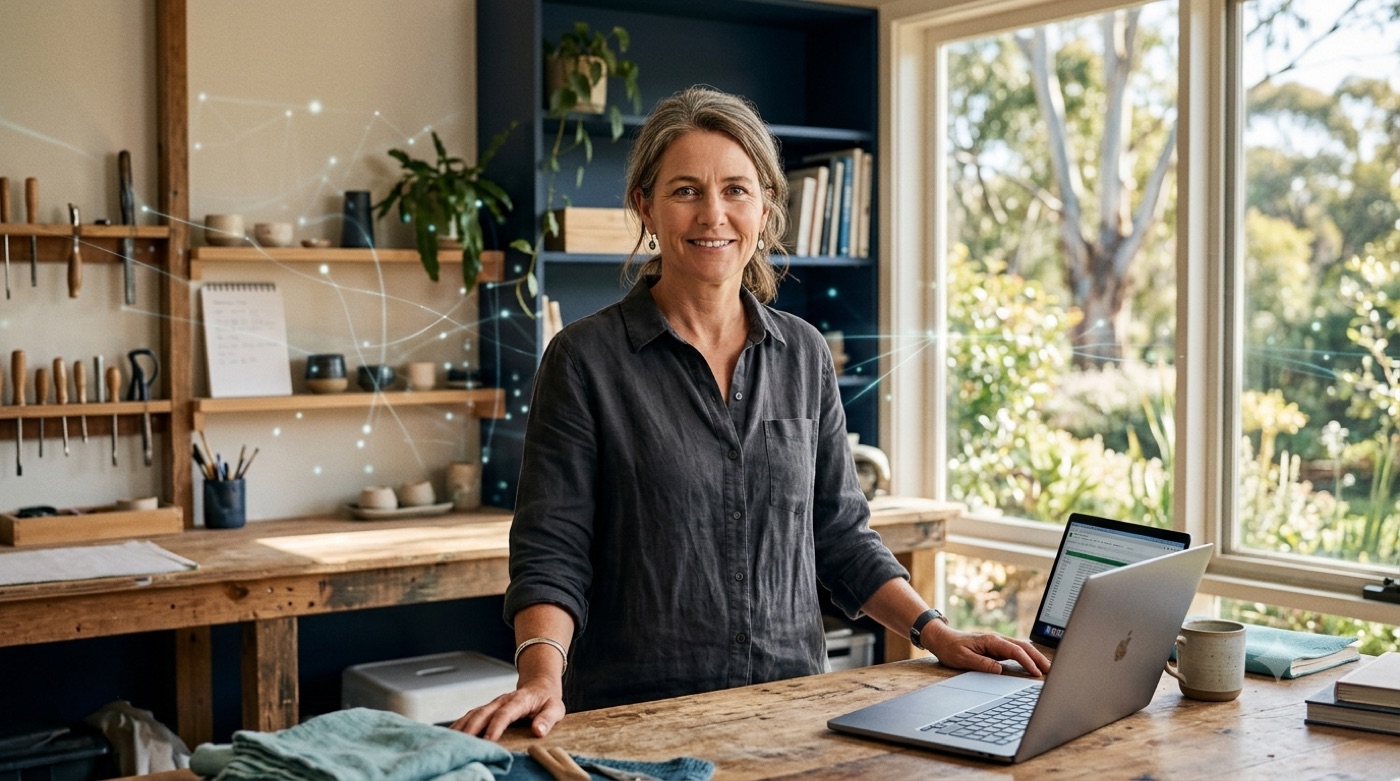
Fear feeds on vagueness. When something is big and fast and lives mostly in headlines, the worry runs ahead of the facts. I have watched a lot of new tools arrive in thirty years, and AI is the strongest case of it I have seen. The nerves in my workshops are real and fair. Those workshops were part of a state programme that has since ended, and I have written about what it did and why it mattered. But most of the fear is fear of a rumour, not a fact.
In July 2026, two documents landed that cut through the rumour, both Australian, both inside a single fortnight: a government stocktake of AI and jobs, and the Prime Minister's plan for how we will govern the technology. One tells you what AI is doing to Australian work right now. The other tells you what the new rules are and who they are aimed at, including a real protection for the people who make things: your work cannot be used to train AI without your consent.
Two questions come up in almost every workshop I run. Here they are, with what the evidence actually says.
Is AI already taking our jobs?
For the first time we have an Australian answer, not an American headline.
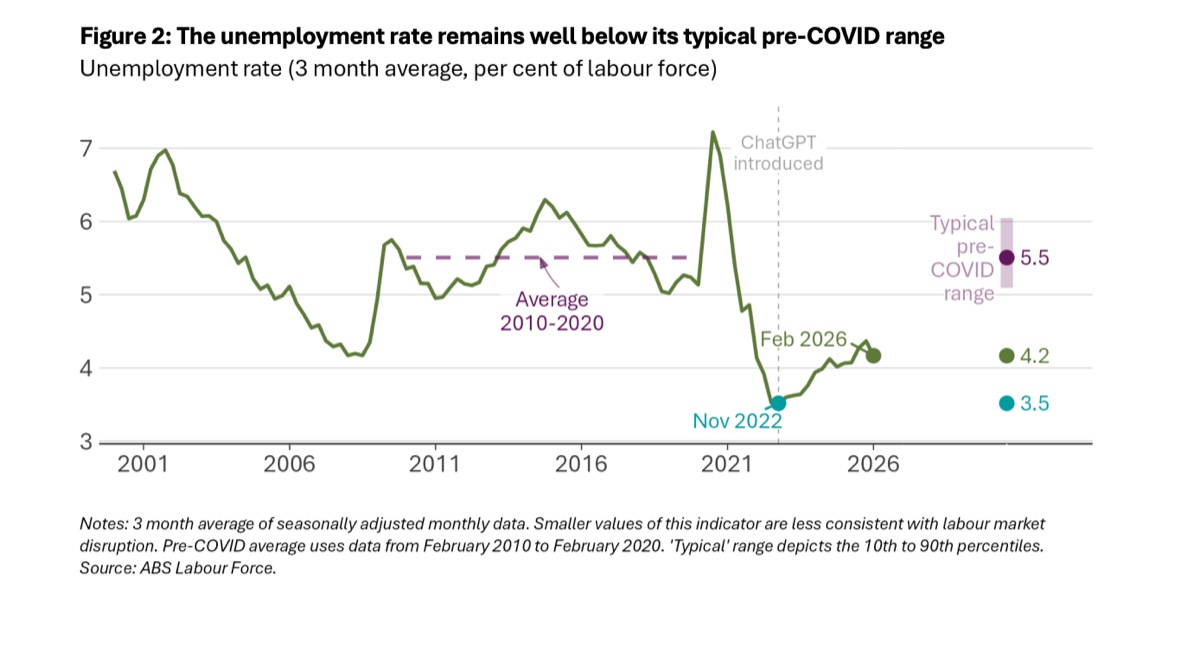
In July the Department of Employment and Workplace Relations released "AI and Employment in Australia". Its finding: no evidence of broad, AI-driven upheaval in the Australian job market. Since ChatGPT arrived in November 2022, the jobs most exposed to AI grew 5.6 per cent. The jobs least exposed grew 9.5 per cent. So the roles AI touches most are still growing, just a little slower than the rest. That is not a wave wiping out work.
The report's model does pick up a signal: a job well above average exposure shows about a 2 per cent relative shortfall by February 2026, against the trend it was on. But the report names its own weak point, and so will I. That signal is not robust. Measure "exposure" another respectable way and it fades to nothing, which the report flags as its own main caveat.
One of those other measures is worth naming. DEWR checked its numbers against Anthropic's data on how its Claude system is actually used at work, published as the Anthropic Economic Index. Anthropic makes Claude, the AI tool I use most and recommend. That is industry data from a company with a stake in the story, used as one input among several, and worth naming for what it is.
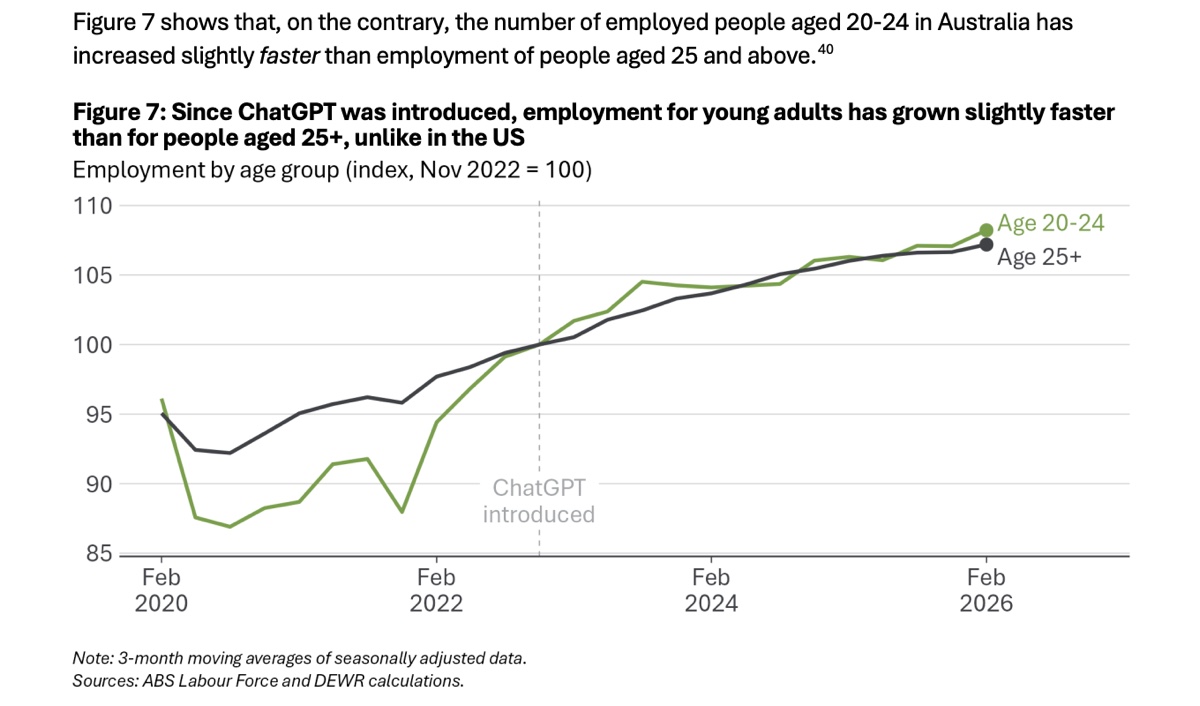
And the scariest version, that young people get squeezed out first, runs backwards here. In Australia, workers aged 20 to 24 grew slightly faster than those 25 and over. Whatever is happening to young Australians at work, the numbers do not show AI hollowing out their end of it.
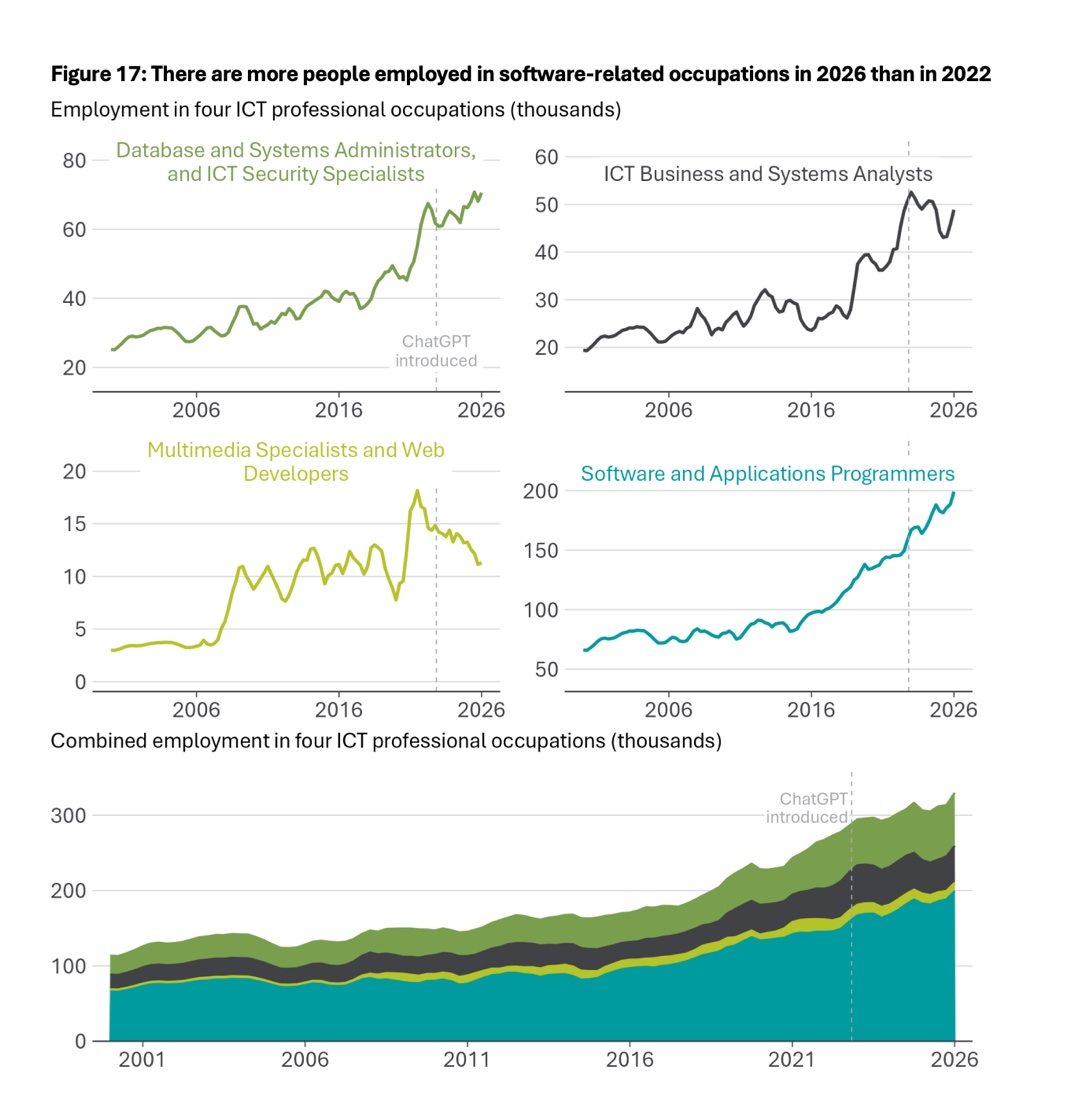
None of this says AI will never touch work. It says the measured effect right now, in this country, is small, patchy, and nowhere near the catastrophe. That is the government's own read of its own numbers.
So what are the new Australian AI rules, and should you worry?
This is where most of the fear actually sits. People hear "AI regulation" as one big thing coming for their business. It helps to see exactly what was announced.
On 15 July, at the University of Sydney, the Prime Minister set out a single national framework: the Australian Standards for AI, described as clear, consistent and mandatory. It does not try to write a rule for every situation. It sets standards and leaves room to move, which keeps it flexible as the technology changes and gives investors enough certainty to build here. A new Office of AI, inside the Department of the Prime Minister and Cabinet, will run it. The timing is not a rush: agreement from the states at National Cabinet in August, draft standards and consultation late this year, legislation to Parliament in early 2027.
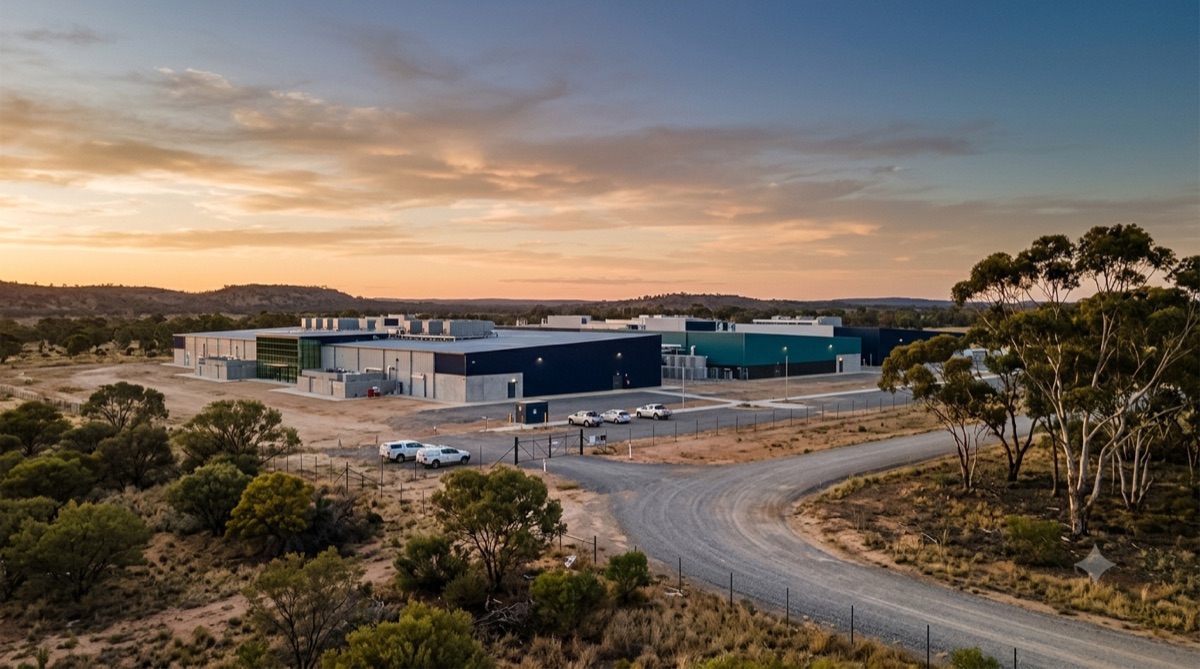
Where the rules bite: the data centres. The sharp edges point at the big operators and their data centres, not at a small business using a chatbot to write a quote. On land, there are controls so data centres do not compete with new housing for the same ground. On power, operators must underwrite new supply, pay the full cost of connecting to the grid, and be "net generators of energy", putting at least as much power back in as they take out. On water, they must minimise use, run efficiently, and pay for any new water infrastructure they force. Read that list and notice who it protects: the people who need housing, the households on the grid, the towns on the water.
Where the rules protect you: the creators
The part I am most pleased about is what it does for the people who make things. Artists, writers, musicians and journalists keep ownership and control of their work, and of its price and value. No company can use Australian creative work to train an AI model without the creator's consent. The Attorney-General is running the consultation on how that is designed. If you write, film, photograph, compose or report for a living, and plenty of us out here do, that is a real line in the sand.

The catch, said plainly. This is a direction, not finished law. The detail is not written. The copyright mechanism especially is still to be designed, through consultation, before it lands. A firm position is worth a lot, and this is one. It is not yet an enforceable law, and it is fair to hold the two apart. A plan you can see coming is far easier to prepare for than a rule that has already arrived.
The reaction in the days after was measured. Coverage was broadly positive, some placing the plan in the same Australian tradition as Medicare and superannuation, while others, including the Greens, called for an independent regulator and raised concerns about government data feeding AI models. Plenty noted strong words and thin enforcement detail, which is fair, and which the catch above already grants. Nothing frightening in any of it.
What "AI regulation" turned out to be
Not a single all-seeing rulebook landing on your desk. A single Australian framework, mandatory but deliberately not exhaustive, aimed at the big operators and their data centres, with a genuine protection for creators built in, and the fine detail still being written between now and early 2027. You can hold that. You can even have a view on it.
What this means for you
If you run a small business, a council team, a not-for-profit or a community group out here, here is the plain version.
The jobs panic is running ahead of the Australian data. The rules are real, mandatory and clear, and their heavy end is aimed at the giant operators and their data centres: where they can build, the power they must put back, the water they must not waste. Those rules guard your housing, your grid and your water. They do not threaten your business. And if you create anything, the government has just planted a flag on your side of the copyright fight, with the detail still to come.
That does not mean sit still. It means you can meet AI the way you would meet any capable new tool: curious, unhurried, clear-eyed. If you want the practical first step, that is treating it like a new employee and handing it one job. The fear was never the useful bit. Good information is. More benefit, less burden, no giving away the farm, and no scaring ourselves with a story the facts do not back. AI, Australian style.
Want a hand working out what any of this means for your business or team?
That is exactly what we love doing. Start a conversation and we will point you to the right first step.
Have a chatMore from the blog
References and citations
- Department of Employment and Workplace Relations, "AI and Employment in Australia", 8 July 2026. Source for every jobs figure here, and for Figures 2, 7 and 17.
- Anthropic, Anthropic Economic Index. The observed-exposure data DEWR used as one cross-check.
- Prime Minister Anthony Albanese, "AI in Australia's interests", University of Sydney, 15 July 2026. Source for the framework, the Office of AI, the mandatory standards, the timeline and the creator protections.
- Gadens, "Prime Minister announces national AI regulation: key takeaways", 16 July 2026. Source for the specific data-centre obligations and the creator-protection detail.
- White & Case, "Australian AI Update: Australia changes course", 16 July 2026. Framework overview and the rejected text-and-data-mining exemption.
- The Conversation, "Australia wants to 'manage' AI. What will that look like?", July 2026. Coverage and reaction.
Figures 2, 7 and 17 are reproduced from the DEWR report, © Commonwealth of Australia, under a Creative Commons Attribution 4.0 licence; underlying data ABS Labour Force. Disclosure: Anthropic, referenced above, makes Claude, the AI tool eMotion Video uses and recommends; its Economic Index is industry-provided data, treated here as one input among several.